Two Different Models, Not a Quality Hierarchy
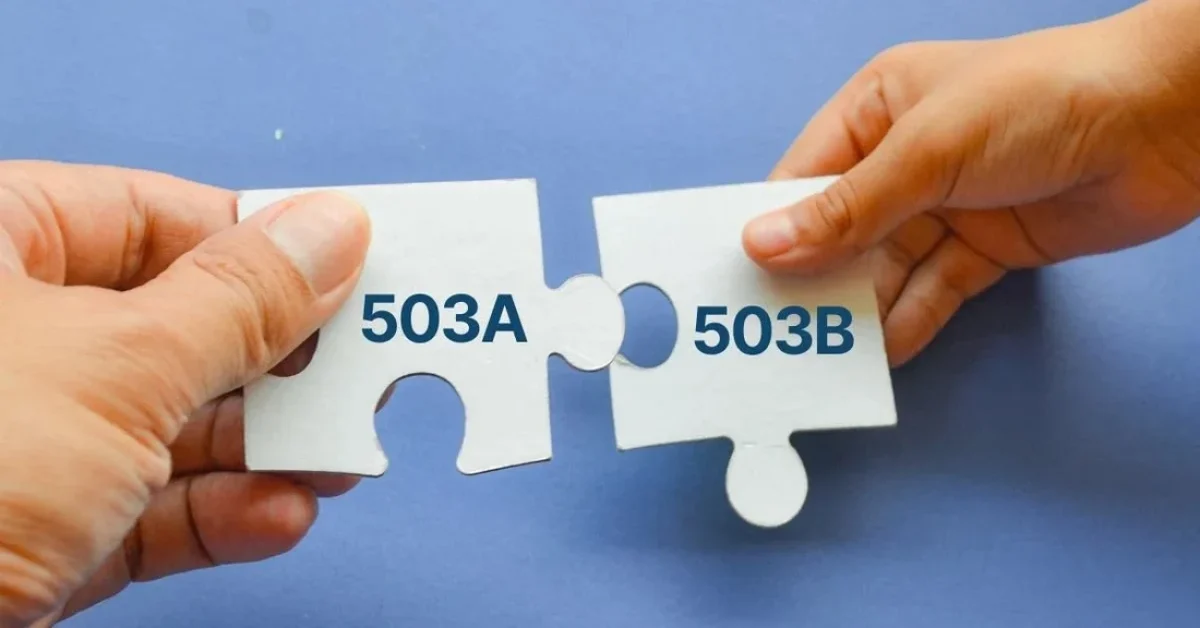
Two sections of the Federal Food, Drug, and Cosmetic Act (FDCA) govern compounding pharmacies in the United States. They establish different oversight structures, different manufacturing requirements, and different parameters for how compounded preparations can be dispensed. Neither was written to make one model superior to the other.
What Is a 503A Compounding Pharmacy?
A 503A compounding pharmacy operates under Section 503A of the FDCA. This is the traditional compounding model: a licensed pharmacist compounds a medication in response to a valid, patient-specific prescription from a licensed prescriber. Every preparation begins with an individual patient and a documented clinical need.
- Prescription required for every preparation. Every compounded medication is tied to an identified individual patient before compounding begins.
- Formulation customized per prescriber direction. Dose, strength, delivery method, base, and added or removed components are tailored to the individual patient.
- State pharmacy board oversight. The primary regulatory authority is the state board of pharmacy where the pharmacy operates.
- USP standards apply. USP 795 (non-sterile), USP 797 (sterile), and USP 800 (hazardous drugs) govern preparation quality.
- Limited anticipatory compounding. Small quantities may be prepared in advance based on documented historical prescribing patterns.
What Is a 503B Outsourcing Facility?
A 503B outsourcing facility is a distinct regulatory category established by the Drug Quality and Security Act (DQSA) of 2013, created in response to a 2012 fungal meningitis outbreak traced to contaminated compounded sterile preparations. The 503B model is designed for large-scale sterile batch production, supplying hospitals, clinics, and provider offices rather than individual patients directly.
- FDA-registered and subject to cGMP inspections, the same manufacturing quality framework applied to commercial drug manufacturers.
- Supplies providers and institutions, not individual patients. A patient receiving a compounded medication is almost always working through a prescriber who sources from a 503B facility, or through a 503A pharmacy that compounds for them specifically.
- No patient-specific prescription required for all orders. Facilities can produce larger batches and distribute to providers without a per-unit prescription on file.
- Anticipatory compounding permitted, enabling supply-chain-level production.
- Less individual formulation flexibility, because customization at the patient level is limited by the batch model.
What Actually Signals Quality in a Compounding Pharmacy
A common misconception is that FDA oversight of 503B facilities makes them categorically safer than 503A pharmacies. This framing misunderstands both designations, and it underestimates what a rigorously accredited 503A pharmacy is required to demonstrate.
The High Standards at Town & Country Compounding Overlap More Than Most People Realize
Much of what the FDA requires of 503B facilities through cGMP is also required of PCAB- and NABP-accredited 503A pharmacies, through USP standards and accreditation requirements that are independently verified on-site. The regulatory pathway is different. The quality outcomes are comparable. Where the requirements converge:
- ISO-classified cleanroom conditions. Both 503B cGMP and USP 797 require preparations made in ISO-classified environments with HEPA filtration and controlled airflow.
- Environmental monitoring programs. Both require ongoing monitoring of cleanroom air and surfaces for microbial and particulate contamination. PCAB verifies the program is documented, executed, and compliant.
- Documented Standard Operating Procedures covering compounding, cleaning, quality control, and safety, reviewed on a defined cycle.
- Personnel training and competency verification, including aseptic technique assessments, garbing qualification, and media-fill testing, verified on-site by PCAB inspectors.
- Beyond-use dating supported by documented procedures, not assigned arbitrarily.
- Ingredient sourcing from qualified suppliers meeting USP or National Formulary standards.
- Quality assurance systems and deviation management, including complaint handling, adverse-event reporting, deviation investigation, and corrective and preventive action systems.
Where 503B Goes Further, and Where PCAB Accreditation Fills the Gap
It is accurate that 503B cGMP imposes additional requirements beyond USP standards, particularly around batch validation, process qualification, and the documentation scale required for large-volume manufacturing. Those requirements make sense for the 503B industrial-scale model.
What they do not account for is the independent, on-site verification that PCAB accreditation provides. A 503A pharmacy can state USP compliance without external verification. A PCAB-accredited pharmacy has had those claims tested by an independent accrediting body, on-site, against published criteria, on a recurring cycle. That is a meaningful distinction that a registration number alone does not convey.
What Using Town & Country Compounding Means for Prescribers and Patients
When a prescriber partners with a PCAB and NABP-accredited 503A pharmacy, such as Town & Country Compounding, they are accessing a pharmacy that has voluntarily met, and independently demonstrated, the core quality infrastructure that serious pharmaceutical compounding requires. The independent quality benchmarks that matter most when evaluating a compounding pharmacy:
- PCAB Accreditation (administered through ACHC), the compounding industry’s highest independent quality accreditation, verified on-site against USP 795, 797, and 800 standards, SOPs, environmental monitoring, personnel competency, and quality systems.
- NABP Accreditation, which independently verifies compliance with professional and operational pharmacy standards.
- LegitScript Certification, which confirms the pharmacy operates in compliance with applicable laws and regulations.
- Multi-state pharmacy licensure, which means a pharmacy is simultaneously subject to scrutiny from multiple state boards.
Town and Country Compounding is a 503A pharmacy holding PCAB accreditation (administered through ACHC) and NABP accreditation, plus LegitScript certification. Town & Country Compounding is licensed to serve patients and providers across more than 22 states. These are not marketing designations. Each is independently verified on a structured review cycle against published quality standards.
The Clinical Case for Patient-Specific Compounding
The strongest argument for a 503A compounding pharmacy is not regulatory. It is clinical. Patient-specific compounding exists because individual patients have needs that commercially available, standardized products were not designed to address. Clinical scenarios where 503A patient-specific compounding delivers value that batch production cannot:
- A prescriber requires a formulation strength or dosing increment not available in any commercial product.
- A patient has an allergy, intolerance, or sensitivity to an excipient in the commercial version.
- A clinical protocol calls for a delivery route, such as sublingual, intranasal, or topical, not commercially available for a given active ingredient.
- A prescriber is managing a customized dose-titration schedule requiring individualized strength at each step.
- A pediatric, bariatric, or otherwise complex patient requires a formulation no commercial product addresses.
Every preparation at a 503A pharmacy begins with a specific patient, a specific prescriber order, and a specific clinical need that a standard commercial product cannot meet.
Why Prescribers Choose Town and Country Compounding
For prescribers evaluating a compounding pharmacy partner, the 503A designation signals a patient-specific model, not a limitation. The relevant criteria are quality verification, formulary depth, and prescriber support.
- PCAB and NABP accreditation. Town & Country Compounding holds PCAB (via ACHC) and NABP accreditation, each requiring periodic on-site verification of USP compliance, sterile preparation protocols, quality assurance processes, and personnel competency.
- Broad clinical formulary across men’s health, hormone therapy, brain health, weight management, ophthalmic preparations, dermatology, and specialty categories.
- More than 22 state licensing, with the compliance infrastructure to support individual patient prescriptions and practice-level consultation.
- Direct prescriber collaboration. Town & Country Compounding’s clinical pharmacists work directly with prescribers on formulation decisions and dose-titration protocols.
- LegitScript certification, confirming compliance with applicable laws and regulations.
Review Town & Country Compounding’s full accreditation profile on our website.
Frequently Asked Questions
Is a 503B pharmacy higher quality than a 503A pharmacy?
Not categorically. 503B outsourcing facilities are subject to FDA registration and mandatory cGMP inspections, which provides a federally verified quality layer for large-scale sterile batch production. A PCAB-accredited 503A compounding pharmacy meets independently verified quality benchmarks that go well beyond minimum state-board requirements, and delivers individualized, patient-specific formulations that batch production cannot replicate. The 503A vs. 503B distinction reflects two different regulatory models, not a quality hierarchy.
Do PCAB-accredited 503A pharmacies meet the same standards as FDA-inspected 503B facilities?
Many core requirements overlap significantly. Both USP 797 (which governs 503A sterile compounding) and FDA cGMP (which governs 503B facilities) require ISO-classified cleanrooms, ongoing environmental monitoring, documented SOPs, personnel training and competency verification, beyond-use dating supported by documented procedures, and ingredient sourcing from qualified suppliers. A PCAB-accredited 503A pharmacy has had all of these systems independently verified on-site, not simply self-reported.
What is the difference between a 503A and 503B compounding pharmacy?
A 503A compounding pharmacy compounds medications in response to individual patient-specific prescriptions, under state pharmacy board oversight and USP quality standards. A 503B outsourcing facility is FDA-registered, subject to cGMP inspections, and can produce larger batches for direct supply to provider offices and clinics without a per-unit patient prescription. The key difference is the model: patient-specific customization for 503A versus large-scale standardized batch supply for 503B.
What is PCAB accreditation and why does it matter?
PCAB (Pharmacy Compounding Accreditation Board), administered through the Accreditation Commission for Health Care (ACHC), is the highest independent quality accreditation available to compounding pharmacies. PCAB-accredited pharmacies are evaluated on-site against rigorous standards covering USP 795 and 797 compliance, sterile preparation protocols, beyond-use dating, quality assurance systems, and staff competency.
What types of medications does Town and Country Compounding prepare?
Town & Country Compounding is a PCAB- and NABP-accredited 503A compounding pharmacy based in Ramsey, NJ (PCAB administered through ACHC). Town & Country Compounding prepares patient-specific formulations across weight management, men’s health, hormone replacement therapy, brain health, ophthalmic preparations, dermatology, and specialty compounds, and is licensed to serve patients and providers across more than 20 states.
How do I verify whether a compounding pharmacy is accredited?
Ask the pharmacy directly for current accreditation documentation. PCAB (via ACHC) and NABP each maintain public registries. You can verify Town & Country Compounding’s accreditation status here. For 503B registration status, the FDA maintains a public outsourcing facility registry at fda.gov.
Does insurance cover medications from a 503A compounding pharmacy?
Coverage varies significantly by plan, payer, and preparation. Neither 503A nor 503B designation guarantees reimbursement. Patients should consult their insurance provider and prescribing clinician for guidance on any compounded medication.
Work With a Quality Compounding Pharmacy That Puts Patient-Specific Care First
The 503A vs. 503B compounding pharmacy distinction is a regulatory-framework question, not a verdict on quality. The right question for prescribers and patients is whether the pharmacy preparing the medication has the independent accreditation, formulation expertise, and clinical-collaboration capability to support the patient’s specific needs.
Town and Country Compounding is a PCAB- and NABP-accredited 503A compounding pharmacy based in Ramsey, NJ, licensed across more than 22 states, compounding patient-specific formulations across a broad clinical formulary and working directly with prescribers to support individualized patient care.
For providers: Partner with Us to discuss how Town & Country Compounding’s patient-specific compounding capabilities can support your practice.
This content is for informational purposes only and does not constitute medical or legal advice. Compounded medications are customized preparations made by a licensed pharmacist based on a valid prescription from your healthcare provider. Always consult your healthcare provider before starting, stopping, or changing any medication.