Atropine Eye Drops May Slow Progression of Myopia in Kids
The prevalence of myopia has significantly increased in one generation. In the US, 40% of kids have myopia today, compared with 20% just 30 years ago, while the number in the UK has doubled in the last 50 years. Up to 90% of the children in many Asian countries have myopia.
The Strength of Atropine Eye Drops Today
Nearsightedness (myopia) in children is usually diagnosed between 5 and 7 years old. It is important to recognize if your child is having problems with seeing at distances as early as possible so they may have access to a therapy that can slow the progression of the condition.
Children with nearsightedness may be able to slow progression with the use of low-dose (concentration) atropine eye drops.
The strengths are usually 0.01%, 0.025%, or 0.05%, which are much lower than the commercially available eye drop strength of 1% that you would get at a traditional pharmacy.
Town & Country Compounding is able to compound the lower-strength eye drop that is needed for children with this condition.
David Epley, MD, a pediatric ophthalmologist in Kirkland, WA, said he uses low-dose atropine eye drops in his practice in children and the results have been significant.
“What we’re seeing is that, for most kids — about 90% — their rate of myopia progression decreases or slows by about half.” Dr. Epley says. “Most kids do not see side effects and the sooner they start using it, the better.”
Why is it important to recognize myopia as early as possible?
Myopia is a risk factor for myopic maculopathy, retinal detachment, cataract and glaucoma in adult life, and the risk increases with the degree of myopia. Those conditions are a lot harder to address than trying to slow the progression of the myopia.
Podcast: Atropine, Engaging with Science and Responsible Practice with Prof. Karla Zadnik (June 29, 2020). Listen here >>
Which low-dose concentration is the best?
Two-Year Clinical Trial of the Low-Concentration Atropine for Myopia Progression (LAMP) Study: Phase 2 Report
The goal of the LAMP study was to compare the efficacy and safety of 0.05%, 0.025%, and 0.01% atropine eye drops over 2 years in order to determine the optimal concentration for controlling myopia.
Conclusion of Study
The authors concluded that, over two years, the efficacy of topical 0.05% atropine was double that of 0.01%, therefore 0.05% is considered the optimal concentration among the studied atropine concentrations in slowing myopia progression.
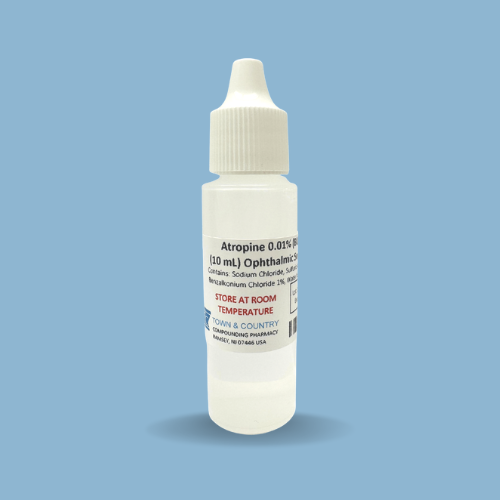
Atropine Eye Drops
Town & Country Compounding compounds various strengths of atropine eye drops for children with myopia (nearsightedness).
Why is a Compounding Pharmacy necessary for Low-Dose Atropine Eye Drops?
The strength of eye drops needed for children with myopia isn’t currently commercially available. A compounding pharmacist can use the higher-strength commercial product and dilute it for the pediatric patient. This is done only in a sterile compounding lab.
Why Would a Sterile Compounded Prescription Be Needed?
Certain drugs, combinations of drugs, concentrations of the drugs, or specific dosage forms that the patient needs may not be commercially available at a traditional retail pharmacy.
For Example: What if your child has myopia and your doctor has prescribed atropine eye drops at a 0.01% concentration? You go to your local retail pharmacy to get the medication filled, and they tell you that the eye drops do not come in the strength you need.
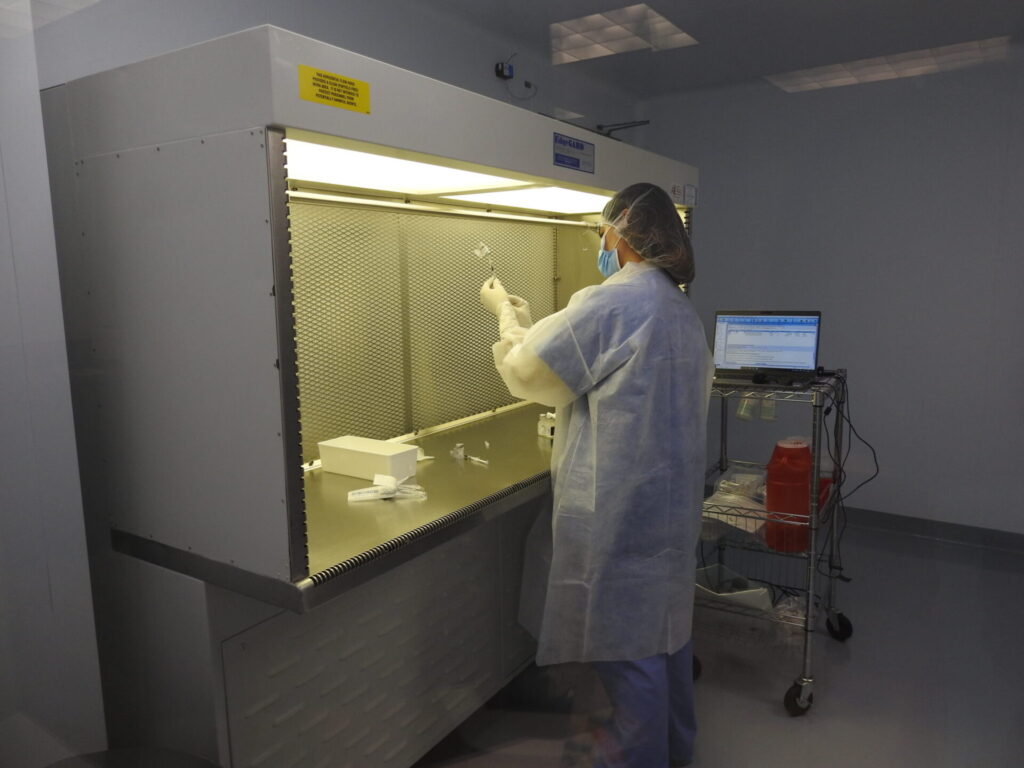
You will need a sterile compounding pharmacy to provide the prescription with the strength your child needs.
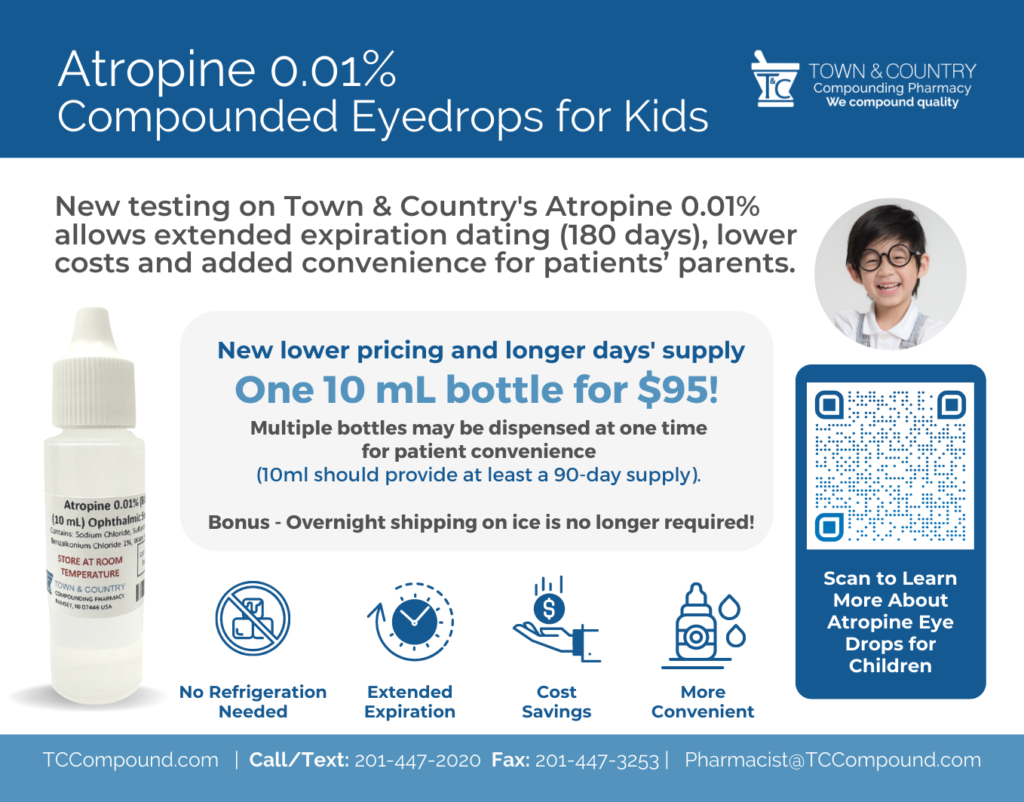
Prescribing 10ml (90-day supply) of atropine eye drops can save the patient money.
An added value option for therapy is to order multiple bottles at one time for patient convenience.
Get in touch with Town & Country Compounding today!
Administering Atropine Eye Drops
Watch this video to learn about Atropine Eye Drops, and how to properly administer them, from expert pharmacist John Herr, RPh.